The Abner-Bagg House
-
Completion period2021 - 2023
-
Budget$779 000
-
Area1000m2
Acquiring an architectural gem, cherished for its history
Located in the heart of Montréal’s historic districts, the Abner‑Bagg House—built between 1819 and 1845—stands out for its unique and timeless character, enhanced by a carefully considered interior redesign.
In 2003, RÉGIS became the owner‑occupant of the building. The recent transformation, combining heritage protection with a contemporary design and construction approach, had to meet a fundamental objective: preserving the existing property. The building was therefore enhanced while avoiding demolitions, all within a sustainable development strategy. This project has transformed our work environment into an inspiring place that honors the history of the Abner‑Bagg House.
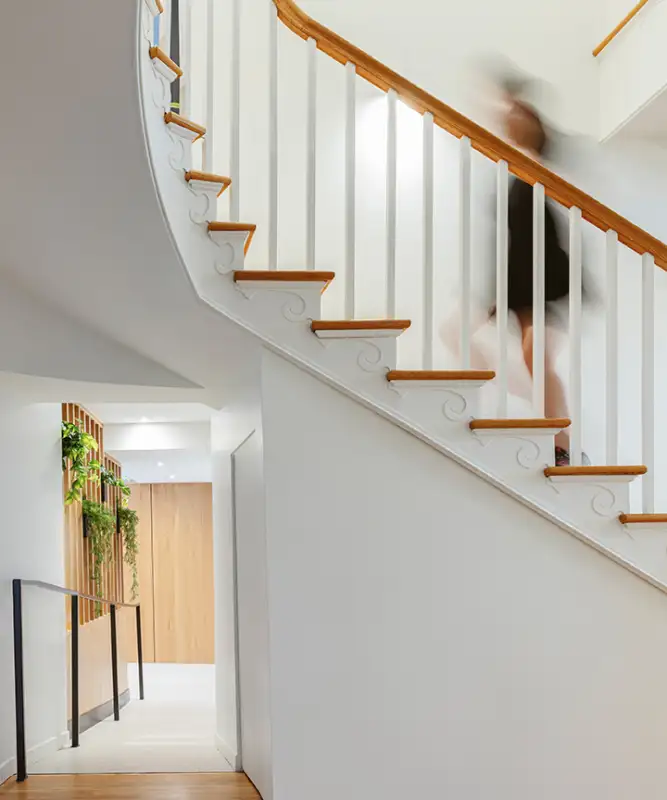
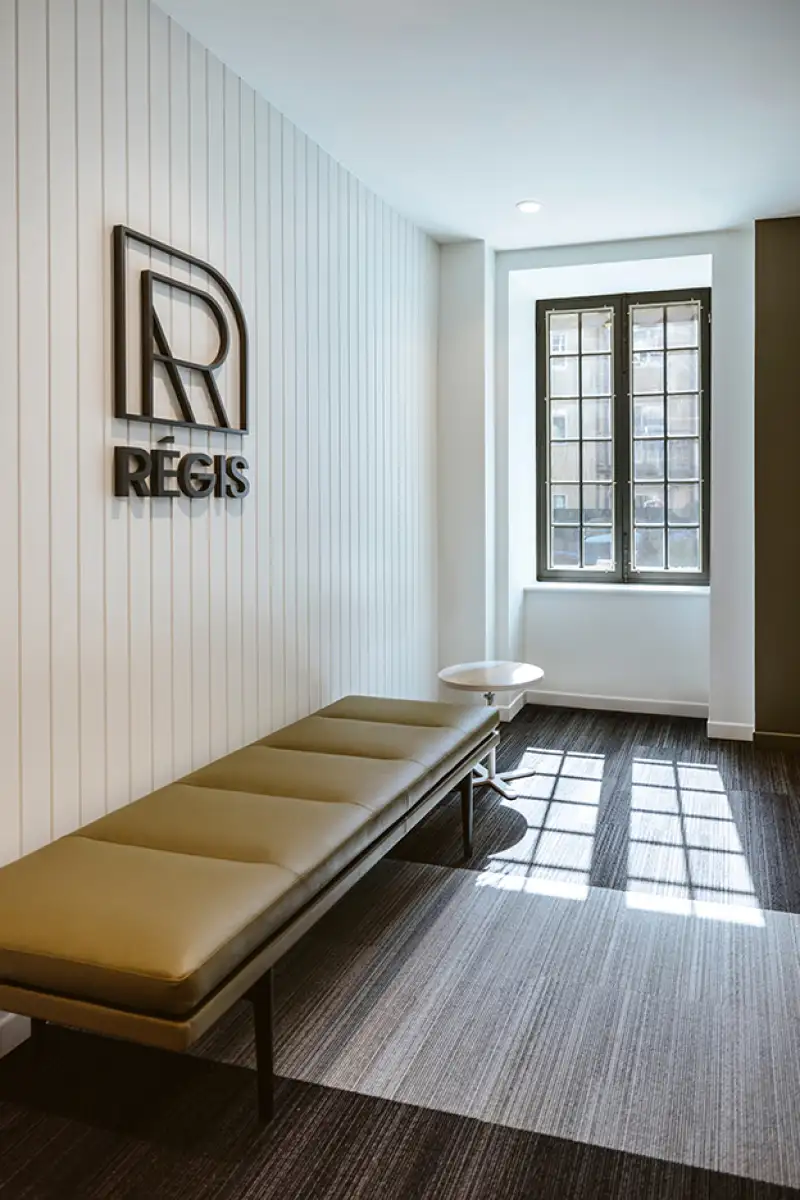
A unique conceptual approach that reinvents the relationship between our team, the office spaces, and their environment
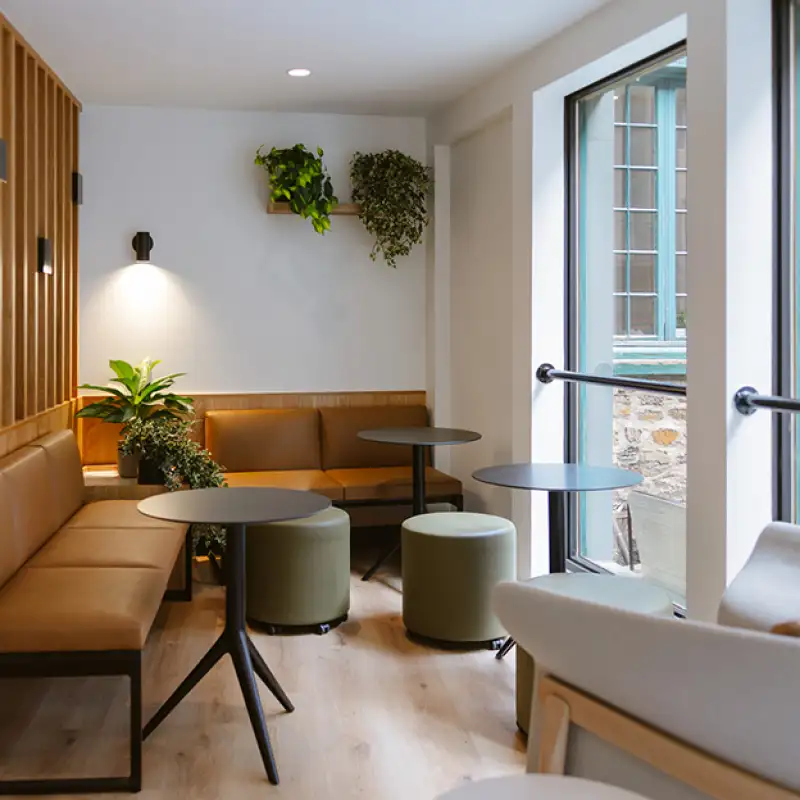
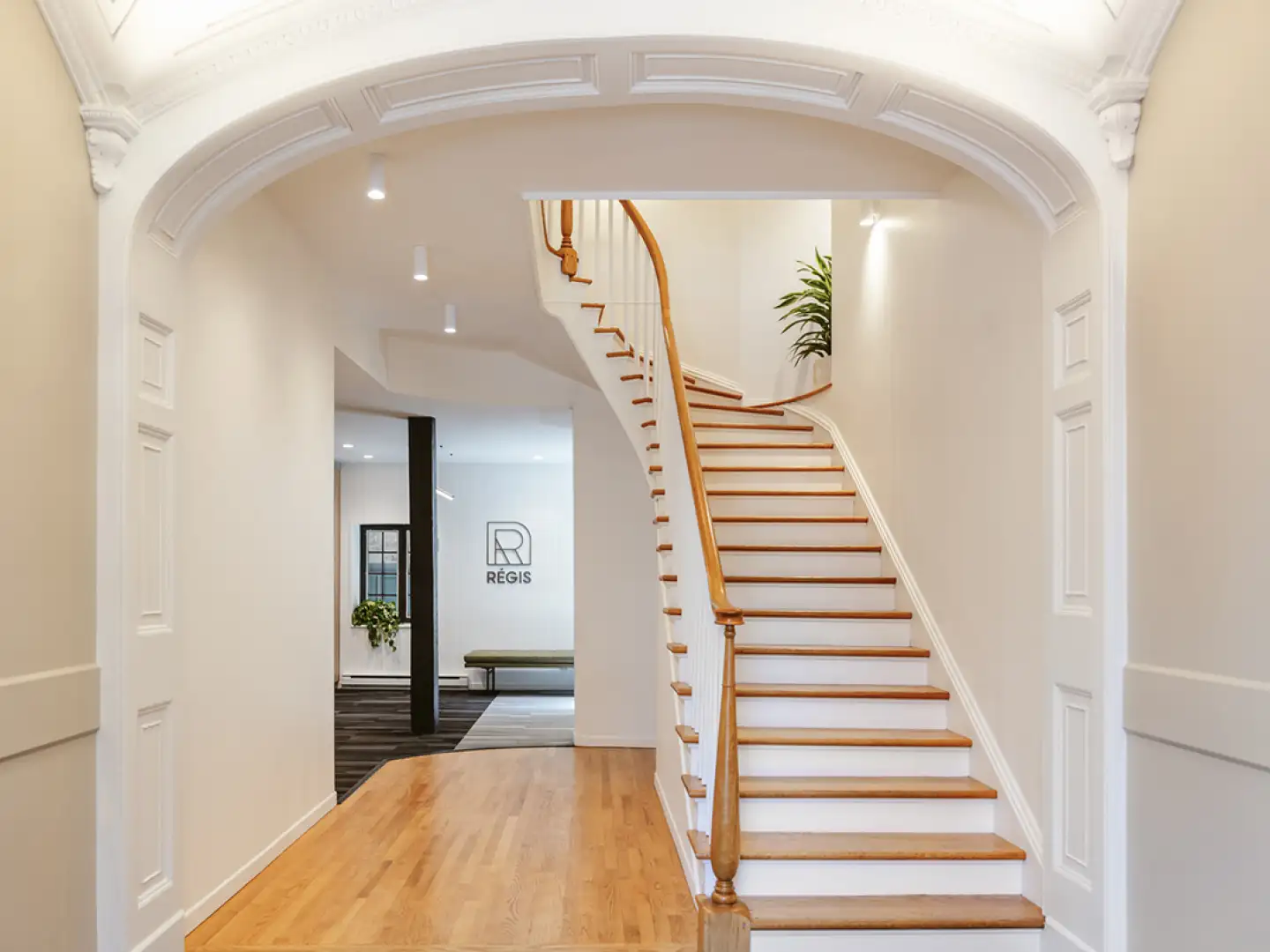
Several legislatively protected structures and details—such as the main staircase, moldings, and rosettes—were preserved. Lighting systems and color palettes were thoughtfully used to highlight these features with elegance. Freeing the building’s interior perimeter and opening up the spaces enabled an advantageous distribution of natural light, while the light tones of the finishes provide additional brightness.
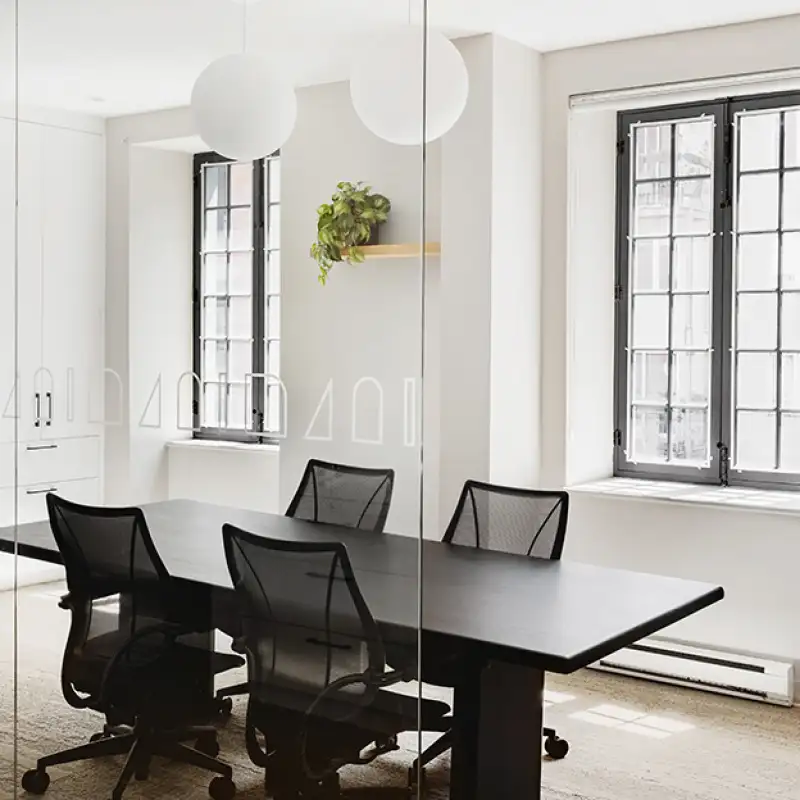
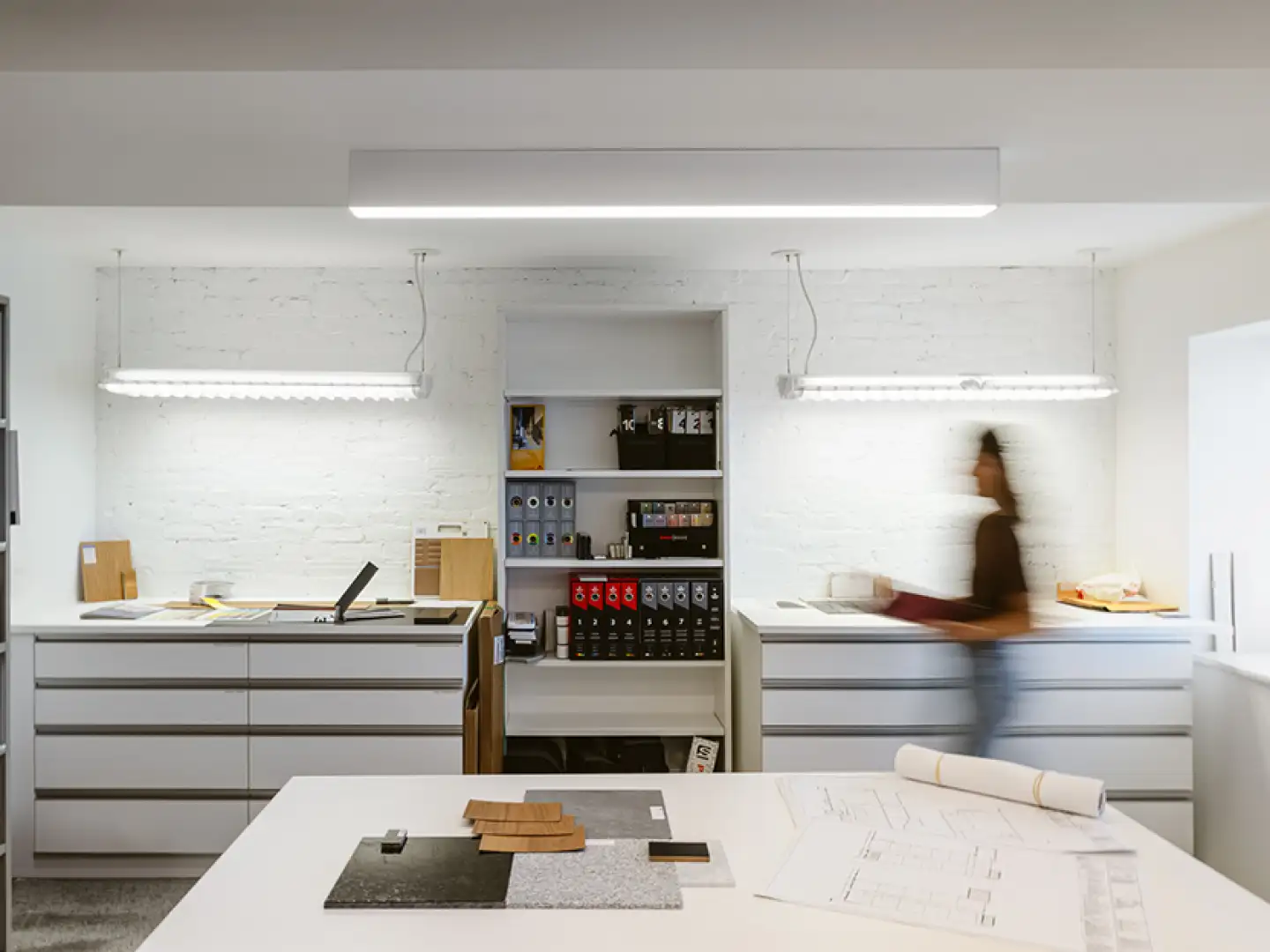
With the well-being of our employees at the heart of our priorities, partitions were replaced with glass walls to create areas dedicated to collaborative work—without darkening the environment. Brick and stone surfaces uncovered during exploratory openings were exposed to contribute to the warm character of the space.
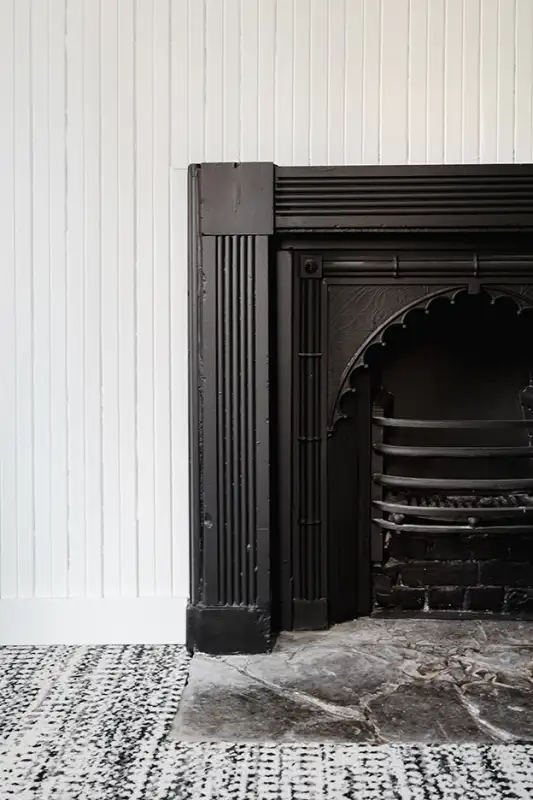
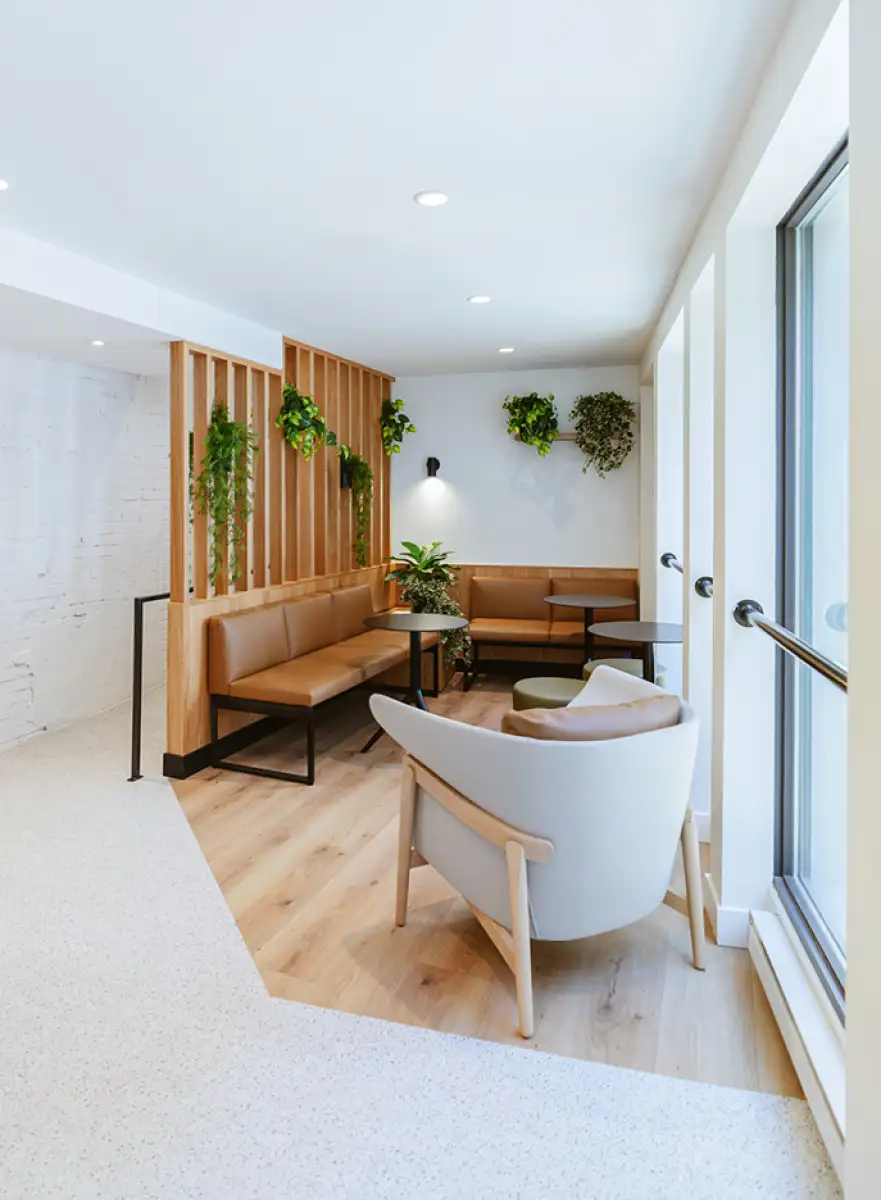
Challenges and considerations that tell a story
The Abner-Bagg House presented several challenges, particularly the need to preserve a heritage building while meeting contemporary requirements. The main challenge lay in creating workspaces within an old, segmented structure protected by law, while adapting it to today’s needs. Spanning more than 1,000 m² across several levels, the building offered opportunities to design open yet subtly divided areas, all while maximizing natural light.
By promoting collaboration and smooth circulation, the solution was to open up the spaces and highlight the original architectural features, creating a functional, bright, and heritage-respectful environment. This restored building has now become a living space where unique moments unfold and bold projects come to life, thanks to a talented team ready to imagine the future of architecture, interior and urban design.